For laboratory research use only. Not for human or veterinary use.
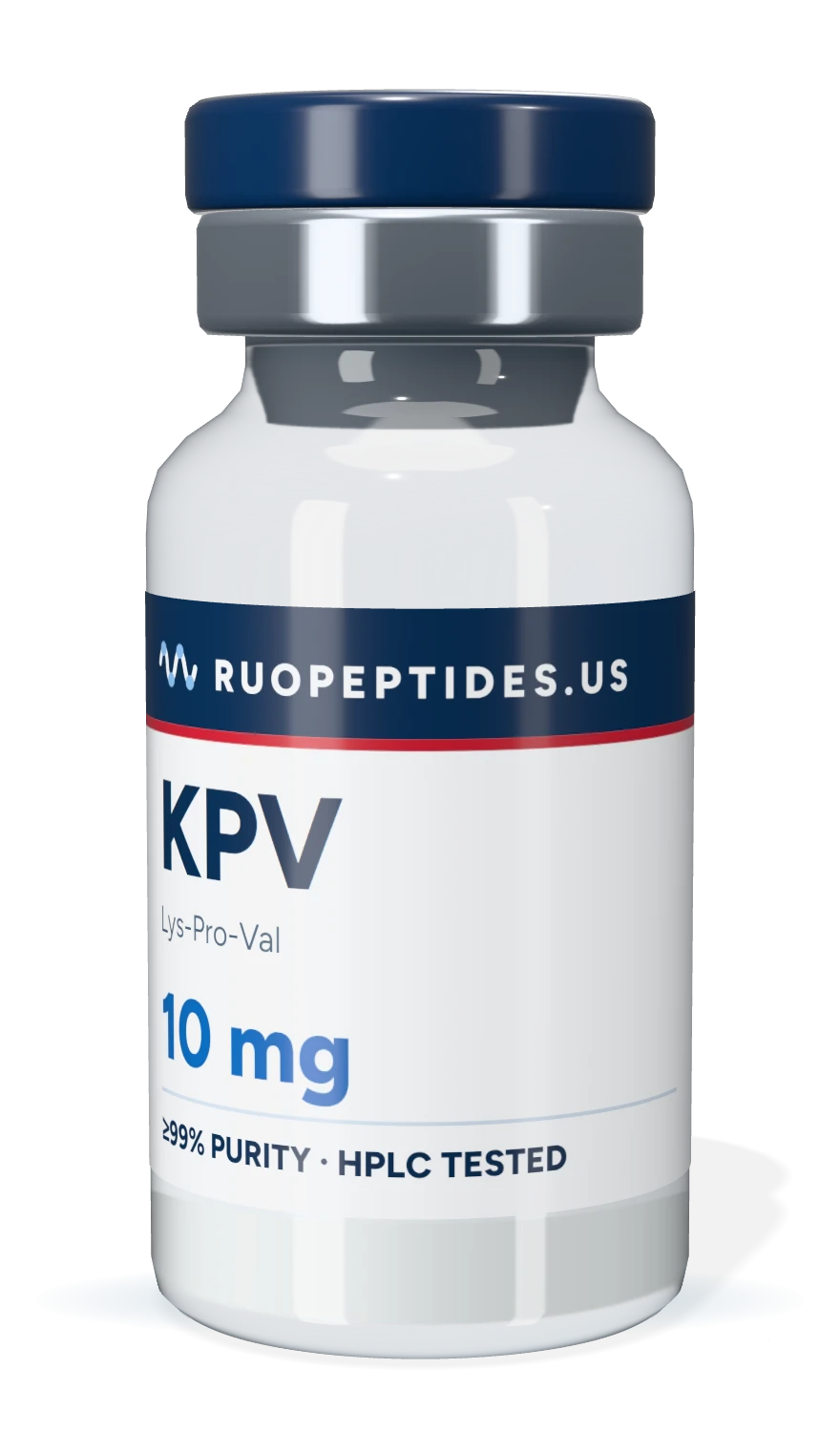
KPV
FOR RESEARCH USE ONLYNot for human or veterinary use of any kind
Full label. Lot number and expiry differ per batch and are printed on each vial.
Melanocortin PeptidesImmune Signaling ResearchGut & Mucosal Research
KPV
Also known as: Lys-Pro-Val, α-MSH (11-13)
KPV Peptide KPV is a three-amino-acid tripeptide that’s composed of Lys-Pro-Val and corresponds to the C-terminal residues 11-13 of α-melanocyte-stimulating hormone (α-MSH).
- CAS
- 27255-71-8
- M.W.
- 341.45 g/mol
- Formula
- C17H31N5O4
- Form
- Lyophilized powder
$45.00per vial
Price shown per vial. Quantity discounts below.
In stock
Buy more, pay less per vial
Add 1 more vial to save 3%: $43.65 per vial.
- Safe credit card paymentVisa, Mastercard and American Express
- 30-day money-back guarantee
- Super-fast 1-2 day shippingTo all 50 states and DC
- Free shipping on orders over $200Applied automatically at checkout
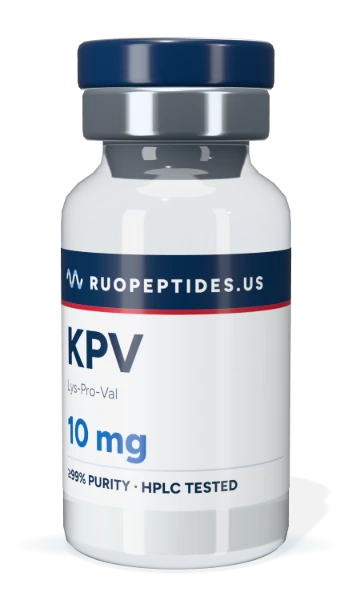
KPV
10 mg · $45.00/vial
Lyophilized KPV storage
Lyophilized KPV peptide should be stored in a dry place, protected from sunlight and moisture.
The following storage conditions are generally recommended:
- Room temperature (15-25 °C / 59-77 °F): Up to ~3-8 months
- Refrigerated (2-8 °C / 35.6-46.4 °F): Up to 6 months
- Frozen (-20 °C / -4 °F or below): 3-5 years
Prior reconstituting with a suitable solvent or Saline, allow the vial to reach room temperature after taking it out of the refrigerator or freezer.
Reconstituted KPV storage
Once in solution, KPV is generally less stable compared to their lyophilized (powdered) form and should be stored at cold temperatures when possible.
These storage conditions are generally recommended:
- Room temperature (15-25 °C / 59-77 °F): Avoid longer than 2-4 day storage
- Refrigerated (2-8 °C / 35.6-46.4 °F): Typically 4-8 weeks
- Frozen (-20 °C / -4 °F or below): Up to 3-4 months
However, to preserve peptide efficacy and amino-acid bonds, avoid repeatedly freezing and unfreezing the peptide.
KPV delivery and shipping
KPV ships from US stock to United States addresses only. Orders are packed and dispatched within 1-2 business days.
- Standard: $9.95, 1-2 business days after dispatch.
- Express: $24.95, next business day after dispatch.
Lyophilized KPV ships in a sealed glass vial with protective packaging. The dry powder is stable at room temperature for the length of domestic transit, so no cold pack is needed. Move it to the storage conditions above when it arrives.
Follow your parcel any time on the Track Order page.
KPV lab testing and COA
The certificate of analysis for KPV is being uploaded. Ask support for the current report before you order if you need it now.
Every vial label has a lot number. Check it on the Verify page to confirm the vial is genuine. All reports are on the Lab Reports page.
For laboratory research use only. All products are sold for laboratory research use only. They are not drugs, foods, cosmetics or dietary supplements, and are not for human or veterinary use.
KPV specifications
- Product
- KPV
- Also known as
- Lys-Pro-Val, α-MSH (11-13)
- Compound class
- Melanocortin Peptides
- Product type
- Peptide
- Form
- Lyophilized powder
- Amounts available
- 10 mg ($45.00), 20 mg ($79.00)
- Sequence
- Lys-Pro-Val
- Molecular weight
- 341.45 g/mol
- Molecular formula
- C17H31N5O4
- CAS number
- 27255-71-8
- Storage as supplied
- Sealed, dry, dark; -20 °C for long-term storage
- Lab report
- COA on request
- Research areas
- Melanocortin Peptides, Immune Signaling Research, Gut & Mucosal Research, Skin & Pigmentation Research
- Intended use
- Laboratory research only. Not for human or veterinary use.
Research overview
About KPV
Scientifically reviewed by John Johnson · Updated November 2026KPV is a three-amino-acid tripeptide that’s composed of Lys-Pro-Val and corresponds to the C-terminal residues 11-13 of α-melanocyte-stimulating hormone (α-MSH).
While it has a brief sequence, KPV has been independently investigated in full-length α-MSH, mainly regarding inflammatory signaling, intestinal peptide transport mechanisms, epithelial cellular responses, and experimental models of systemic and mucosal inflammation [1].
The research into KPV highlights the functional dissociation from the full-length melanocortin hormone structures it has.
What Is KPV?
So, KPV stands for Lys-Pro-Val, and this is a tripeptide consisting of only three amino acids. It directly matches the amino acid sequence that spans positions 11-13 at the C-terminal terminus of α-MSH.
There were functional investigations early on and the researchers realized that the short sequence was a crucial driver of the anti-inflammatory activity observed with full-length α-MSH [1].
Despite its origin, it’s important to understand KPV doesn’t reproduce the full receptor binding or activation profile of complete α-MSH. While native melanocortin hormones interact across classical MC1R-MC5R receptors to influence pigmentation and systemic signaling, KPV functions through a distinct biochemical footprint.
Experimental models have shown that a number of KPV-mediated cellular responses happen independently of both MC1R and classic melanocortin signaling pathways [1], [2].
KPV and Inflammatory Signaling
There was evaluation on whether the isolated C-terminal KPV tripeptide maintains the anti-inflammatory properties of full-length α-MSH via foundation research, with the studies demonstrating distinct anti-inflammatory activity in murine inflammation models. What this showed was KPV working through mechanisms that are distinct from classical melanocortin peptides.
Something really interesting is that KPV exhibited activity without functional MC1R and without initiating the intracellular cAMP accumulation that we tend to see with melanocortin receptor activation [1].
Then, research followed in human bronchial epithelial cells; it examined KPV’s influence over inflammatory cascades, and professionals fed back attenuation of nuclear factor-kappa B (NF-κB) signaling, inhibition of p65RelA nuclear translocation and downstream suppression of interleukin-8 (IL-8), eotaxin, and matrix metalloproteinase-9 (MMP-9) expression [2]. By preventing the p65RelA subunit from entering the nucleus, KPV effectively inhibits transcriptional activation of these key inflammatory mediators, reducing neutrophil and eosinophil recruitment at the cellular level.
PepT1-Mediated KPV Uptake and Intestinal Inflammation
PepT1 (peptide transporter 1) is a dedicated membrane transporter, and one that is responsible in terms of the uptake of di- and tripeptides. Yes, it is generally expressed mainly in the small intestine, but PepT1 expression becomes markedly upregulated in the colon during inflammatory conditions.
Intestinal epithelial models in vitro and in vivo studies alike showed us that KPV is actively transported into cells, and this happens via PepT1.
After uptake, KPV influenced NF-κB and mitogen-activated protein kinase (MAPK) signaling cascades, and this resulted in reduced secretion of pro-inflammatory cytokines. In murine models of dextran sulfate sodium (DSS)- and trinitrobenzene sulfonic acid (TNBS)-induced colitis, PepT1-mediated uptake was found by researchers to be an absolutely vital requirement for KPV's observed attenuation of intestinal inflammation [3].
KPV in Experimental Colitis Models
There have been extensive preclinical studies carried out for the extensive evaluation of this Lys-Pro-Val peptide across diverse models of intestinal pathology. When it came to the research that utilized DSS-induced colitis and CD45RBhigh CD4+ T-cell transfer colitis models, it demonstrated that KPV administration altered inflammatory cell infiltration and bettered histological injury scores, while also decreasing mucosal myeloperoxidase (MPO) activity.
Crucially, the protective responses were persistent in mice who lacked functional MC1R; this confirmed that KPV's intestinal activity operates independently of classic MC1R activation pathways [4].
Subsequent research explored the broader implications of PepT1-mediated transport in chronic intestinal inflammation and colitis-associated tumorigenesis.
Studies made it very clear that utilizing KPV as a PepT1-transportable tripeptide suppressed persistent inflammatory signaling and also reduced tumor burden in experimental colitis-associated cancer models [5].
KPV and Targeted Peptide-Delivery Research
The more recent research in this field focuses on overcoming oral administration barriers, like rapid enzymatic degradation, through targeted peptide delivery systems.
Researchers developed hyaluronic-acid-functionalized nanoparticles to deliver KPV directly to targeted colonic epithelial cells and macrophages. In mouse models, these targeted nanocarriers effectively reached inflamed colonic tissue, strengthening mucosal barrier integrity and turning down pro-inflammatory cytokine activity [6].
Further ongoing studies utilize KPV as a prototype tripeptide in inflammation-responsive carrier platforms.
This demonstrates its continued utility in terms of evaluating the novel strategies to conquer gastrointestinal absorption barriers and enzymatic degradation [7].
KPV FAQ
What does KPV stand for?
KPV stands for Lysine-Proline-Valine (Lys-Pro-Val); this represents the single-letter or three-letter amino acid sequence code for this specific tripeptide. This is what makes it such an important focus for targeted anti-inflammatory research.
How many amino acids are in KPV?
KPV contains exactly a trio of amino acids (the three are lysine, proline, and valine), classifying it structurally as a short-chain tripeptide. It is short, and this is why it lacks the complex folding often found in larger proteins. The result of this is an allowance for easier cellular transport and lower steric hindrance during cellular interactions.
Is KPV the same as α-MSH?
No, it isn't the same. While KPV corresponds to the C-terminal amino acids 11-13 of α-MSH, it lacks the full 13-amino-acid structure and distinct receptor binding properties of full-length α-MSH.
What is KPV studied for?
It tends to be studied in preclinical research that examines signaling pathways, PepT1 transport mechanisms, epithelial cell responses and targeted gastrointestinal peptide delivery systems. Researchers evaluate its influence on NF-κB activation, cytokine secretion, and mucosal integrity in experimental models, offering valuable insights into potential therapeutic applications for inflammatory conditions.
What is the relationship between KPV and PepT1?
PepT1 is a solute transporter and actively transports di- and tripeptides, such as KPV, across epithelial cell membranes, mediating its cellular uptake during intestinal inflammation. When upregulated in the inflamed colon, PepT1 facilitates direct intracellular transport of KPV into affected cells.
Does KPV act through MC1R?
A lot of research has indicated to us that KPV can exert anti-inflammatory effects independently of functional MC1R signaling. As a result of this, it distinguishes its cellular activity from classical melanocortin receptor pathways. It accomplishes this without generating the cyclic AMP (cAMP) accumulation typically triggered by standard MC1R activation.
Scientific references
- [1]Getting SJ, Schiöth HB, Perretti M. Dissection of the anti-inflammatory effect of the core and C-terminal (KPV) alpha-melanocyte-stimulating hormone peptides. Journal of Pharmacology and Experimental Therapeutics. 2003;306(2):631-637. Available at
- [2]Moustafa M, Szabo M, Ghanem GE, et al. Inhibition of cellular and systemic inflammation cues in human bronchial epithelial cells by melanocortin-related peptides: mechanism of KPV action and a role for MC3R agonists. International Journal of Immunopathology and Pharmacology. 2013;26(3):611-626. Available at
- [3]Dalmasso G, Charrier-Hisamuddin L, Nguyen HTT, Yan Y, Sitaraman S, Merlin D. PepT1-mediated tripeptide KPV uptake reduces intestinal inflammation. Gastroenterology. 2008;134(1):166-178. Available at
- [4]Kannengiesser K, Maaser C, Heidemann J, et al. Melanocortin-derived tripeptide KPV has anti-inflammatory potential in murine models of inflammatory bowel disease. Inflammatory Bowel Diseases. 2008;14(3):324-331. Available at
- [5]Viennois E, Ingersoll SA, Ayyadurai S, et al. Critical role of PepT1 in promoting colitis-associated cancer and therapeutic benefits of the anti-inflammatory PepT1-mediated tripeptide KPV in a murine model. Cellular and Molecular Gastroenterology and Hepatology. 2016;2(3):340-357. Available at
- [6]Xiao B, Xu Z, Viennois E, et al. Orally Targeted Delivery of Tripeptide KPV via Hyaluronic Acid-Functionalized Nanoparticles Efficiently Alleviates Ulcerative Colitis. Molecular Therapy. 2017;25(7):1628-1640. Available at
- [7]Inflammation-triggered self-immolative conjugates enable oral peptide delivery by overcoming gastrointestinal barriers. ACS Nano. 2026. Available at
Buying KPV for research in the USA
Price
From $45.00. 10 mg: $45.00, 20 mg: $79.00. Quantity discounts per size: 3% off 2 vials, 5% off 3-4 vials, 7% off 5+ vials.
Shipping
US addresses only. Orders are packed and dispatched within 1-2 business days. Standard from $9.95.
Proof it's genuine
Check the lot number on your vial on the Verify page.
Lab reports
COA and SDS documents are on the Lab Reports page.
Scientifically reviewed
Scientifically reviewed by John Johnson
Scientific reviewer · Last reviewed November 2026
John Johnson reviewed this KPV page for scientific accuracy: the compound's identity and specifications, the summaries of published studies, and the references they cite. The page describes laboratory and preclinical research only. It is not medical advice and gives no usage guidance.
Research information on this page summarizes published laboratory and preclinical studies. It is not usage guidance.