For laboratory research use only. Not for human or veterinary use.
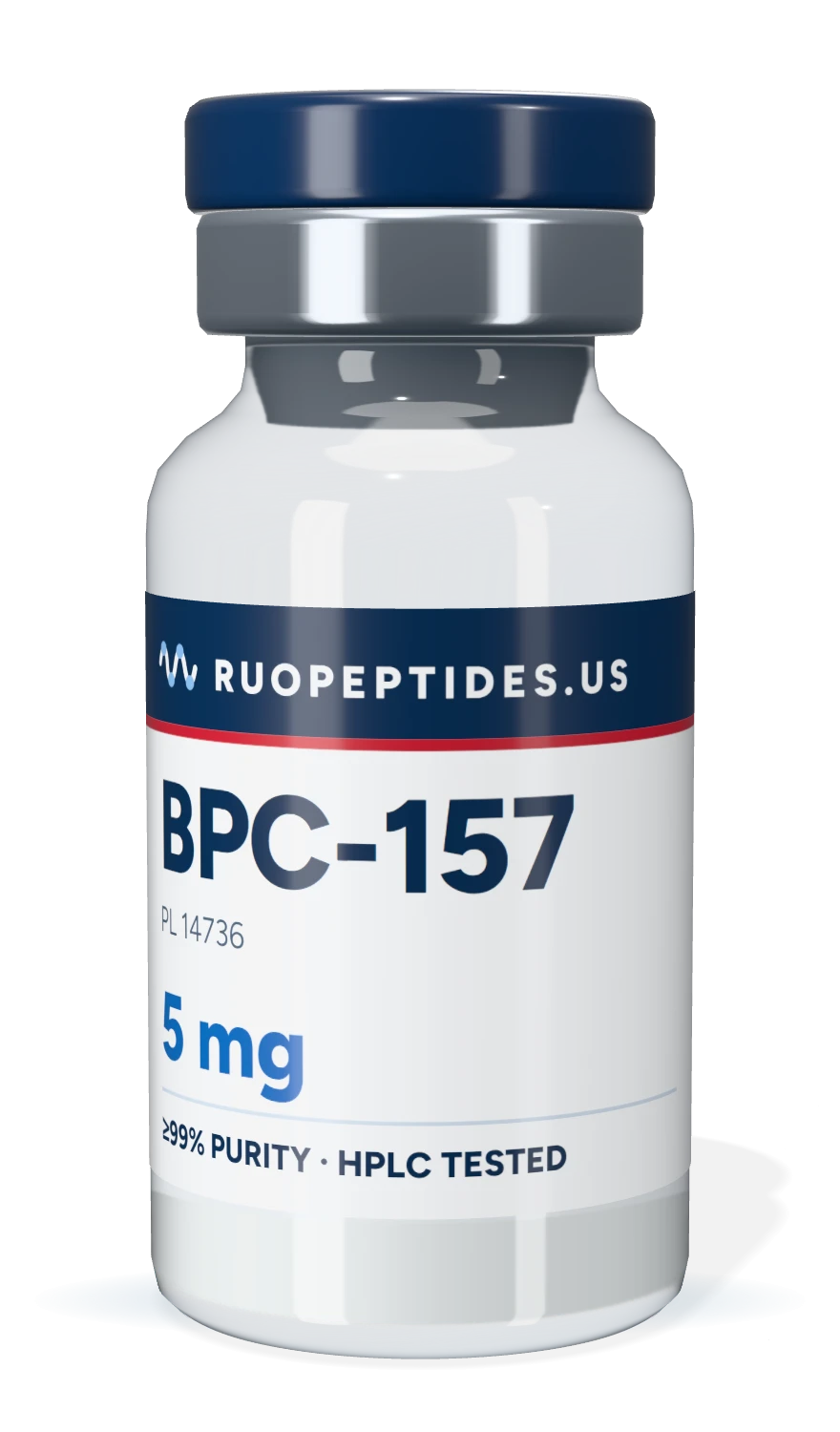
BPC-157
FOR RESEARCH USE ONLYNot for human or veterinary use of any kind
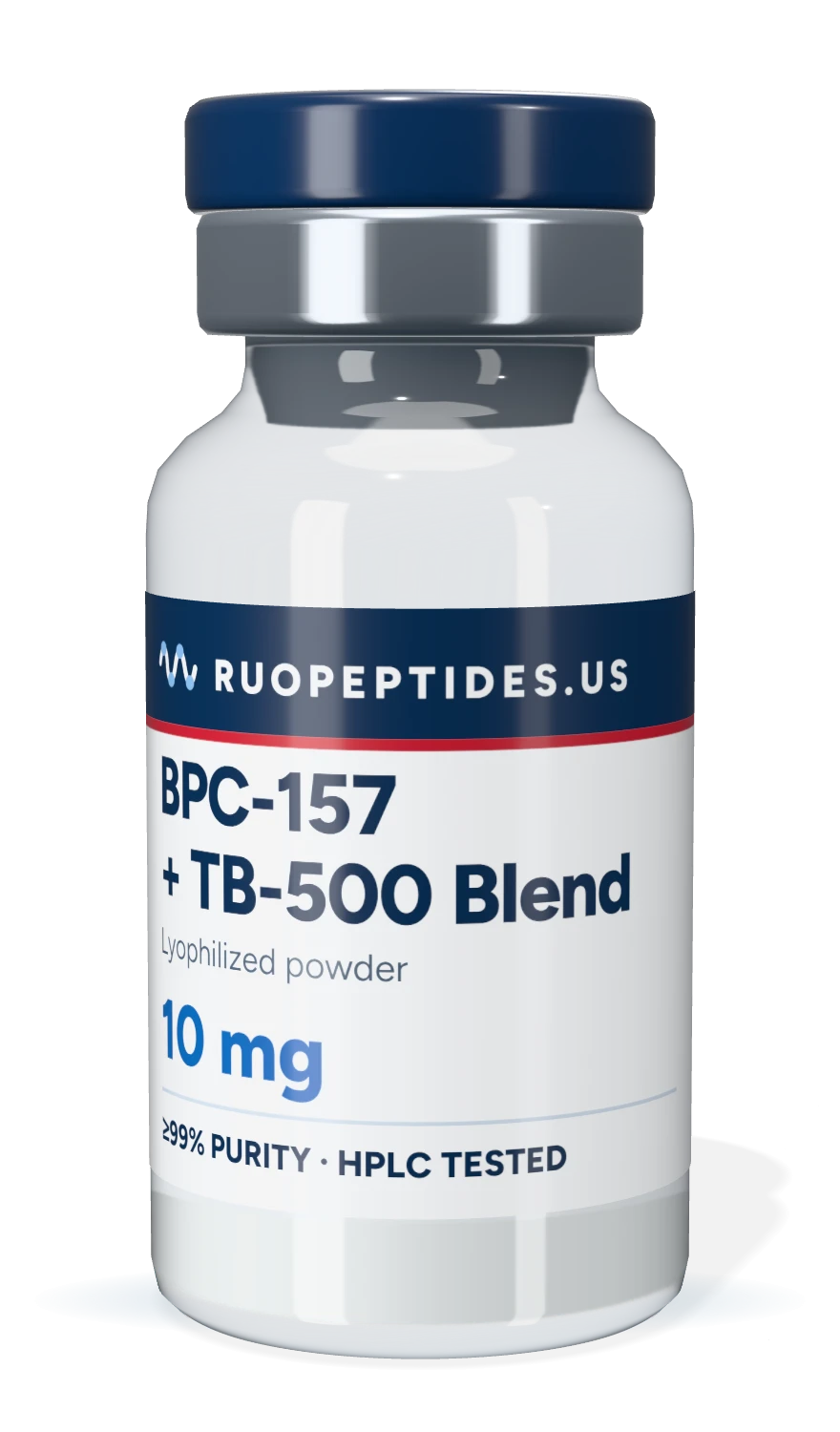
Full label. Lot number and expiry differ per batch and are printed on each vial.
Tissue & Matrix ResearchGut & Mucosal Research
BPC-157
Also known as: PL 14736, Body Protection Compound-157
BPC-157 is a synthetic 15-amino-acid peptide investigated in tissue-repair models, endothelial signaling and gastrointestinal mucosal research. It is supplied as a lyophilized powder for in vitro and analytical investigation. The studies summarized here are principally preclinical.
- CAS
- 137525-51-0
- M.W.
- Approximately 1,419.5 g/mol (free peptide)
- Formula
- C62H98N16O22
- Form
- Lyophilized powder
$39.00per vial
Price shown per vial. Quantity discounts below.
In stock
Buy more, pay less per vial
Add 1 more vial to save 3%: $37.83 per vial.
- Safe credit card paymentVisa, Mastercard and American Express
- 30-day money-back guarantee
- Super-fast 1-2 day shippingTo all 50 states and DC
- Free shipping on orders over $200Applied automatically at checkout
BPC-157
5 mg · $39.00/vial
Lyophilized BPC-157 storage
Keep sealed, dry and protected from light. Follow the label, SDS and lot-specific temperature and expiry instructions.
Reconstituted BPC-157 storage
Validate solution stability for the experimental conditions.
BPC-157 delivery and shipping
BPC-157 ships from US stock to United States addresses only. Orders are packed and dispatched within 1-2 business days.
- Standard: $9.95, 1-2 business days after dispatch.
- Express: $24.95, next business day after dispatch.
Lyophilized BPC-157 ships in a sealed glass vial with protective packaging. The dry powder is stable at room temperature for the length of domestic transit, so no cold pack is needed. Move it to the storage conditions above when it arrives.
Follow your parcel any time on the Track Order page.
BPC-157 lab testing and COA
The certificate of analysis for BPC-157 is being uploaded. Ask support for the current report before you order if you need it now.
Every vial label has a lot number. Check it on the Verify page to confirm the vial is genuine. All reports are on the Lab Reports page.
For laboratory research use only. All products are sold for laboratory research use only. They are not drugs, foods, cosmetics or dietary supplements, and are not for human or veterinary use.
BPC-157 specifications
- Product
- BPC-157
- Also known as
- PL 14736, Body Protection Compound-157
- Compound class
- Tissue & Matrix Research
- Product type
- Peptide
- Form
- Lyophilized powder
- Amounts available
- 5 mg ($39.00), 10 mg ($69.00), 20 mg ($119.00)
- Chemical class
- Synthetic pentadecapeptide
- Peptide length
- 15 amino acids; linear peptide
- Sequence
- GEPPPGKPADDAGLV
- Molecular formula
- C62H98N16O22
- Molecular weight
- Approximately 1,419.5 g/mol (free peptide)
- CAS number
- 137525-51-0
- Research focus
- Connective tissue; endothelial biology; mucosal injury
- Storage as supplied
- Sealed, dry, dark; -20 °C for long-term storage
- Lab report
- COA on request
- Research areas
- Tissue & Matrix Research, Gut & Mucosal Research
- Intended use
- Laboratory research only. Not for human or veterinary use.
Research overview
About BPC-157
Scientifically reviewed by John Johnson · Updated November 2026BPC-157 is a synthetic 15-amino-acid peptide investigated in tissue-repair models, endothelial signaling and gastrointestinal mucosal research. It is supplied as a lyophilized powder for in vitro and analytical investigation. The studies summarized here are principally preclinical.[3][4][5]
BPC-157 appears in experimental literature as a gastric pentadecapeptide, with a sequence reported to derive from a larger body protection compound associated with gastric juice. The laboratory material is a synthetic peptide. Its research profile spans cell migration, connective-tissue injury models and vascular responses.[1][4]
Interest in BPC-157 comes from observations across several experimental systems. Tendon fibroblasts, endothelial cells and rodent injury models provide different kinds of evidence, so findings should be read alongside the model and endpoint used in each paper.
What Is BPC-157?
BPC-157 is a linear peptide with the sequence Gly-Glu-Pro-Pro-Pro-Gly-Lys-Pro-Ala-Asp-Asp-Ala-Gly-Leu-Val. Fifteen residues make it a pentadecapeptide. PL 14736 is another designation used in published experimental work.[4]
There is no single established receptor mechanism that explains all reported BPC-157 findings. The cited studies investigate several signaling systems, including FAK-paxillin-associated cell migration, growth hormone receptor expression and VEGFR2-Akt-eNOS signaling. These are model-specific observations rather than proof of a universal repair mechanism.[1][2][3]
BPC-157 Research Applications
Published BPC-157 investigations cover several connected areas of cellular, vascular and tissue biology:
- Tendon fibroblast migration: Studying outgrowth from rat tendon explants, cell survival under oxidative stress and fibroblast migration. Chang and colleagues linked migration-related responses to FAK-paxillin signaling; direct proliferation was not increased in their MTT assay.[1]
- Growth hormone receptor expression: Examining receptor expression and responses to added growth hormone in cultured rat tendon fibroblasts. This work concerns cellular receptor expression and should not be presented as evidence that BPC-157 raises circulating growth hormone.[2]
- Angiogenesis and endothelial signaling: Investigating VEGFR2 expression, receptor internalization and downstream Akt-eNOS activity. The cited work includes endothelial-cell assays, chick membrane angiogenesis and a rat hindlimb ischemia model.[3]
- Ligament injury models: Assessing functional, biomechanical and histological endpoints after medial collateral ligament transection in rats. These findings concern a specific experimental injury model.[4]
- Gastrointestinal mucosal biology: Examining tissue injury, blood-vessel responses and ischemia-reperfusion in experimental rat colitis. These investigations do not establish a treatment for human inflammatory bowel disease.[5]
- Nitric oxide and vascular tone: Studying endothelium-dependent relaxation in isolated rat aorta and Src-caveolin-1-eNOS signaling in vascular cells. These are experimental vascular findings rather than clinical cardiovascular outcomes.[6]
Evidence in context. The mechanistic breadth of the literature makes experimental context essential. The studies summarized here do not establish human therapeutic effectiveness or a human safety profile. FDA has identified limited safety information and concerns involving immunogenicity, peptide-related impurities and characterization in the compounding context.[7]c
Catalog and source notes
| Catalog amounts / price | 5 mg: $39.00 | 10 mg: $69.00 | 20 mg: $119.00a |
| Shipping | US addresses only; listed dispatch time 1-2 business days. Standard shipping from $9.95.a |
| Lab reports / identity | COA on request. Use the vial lot number to request the matching analytical report and SDS. |
| Storage / handling | Keep sealed, dry and protected from light. Follow the label, SDS and lot-specific temperature and expiry instructions. Validate solution stability for the experimental conditions. |
Catalog source: local BPC-157 product page. Prices, availability and shipping terms may change. Confirm the current listing before ordering.
a. Vial sizes and commercial details reflect the local catalog on 12 November 2026; confirm the current listing and matching lot COA. b. Formula and mass describe the free peptide; counterions, water and other lot constituents are excluded. Confirm the supplied chemical form.
c. In vitro = cells in culture; ex vivo = isolated tissue outside the organism; preclinical findings do not establish human benefit.
Laboratory research only. Published injury-model results are not a clinical indication or a recommendation for human use.
Sources and catalog checked 12 November 2026. Descriptive reference titles are labeled; article links identify the full publications.
Numbered citations throughout this description link directly to the sources below. Model notes identify the evidence each source provides.
BPC-157 FAQ
Is BPC-157 a naturally occurring peptide?
How many amino acids are in BPC-157?
BPC-157 contains 15 amino acids, making it a pentadecapeptide. Its one-letter sequence is GEPPPGKPADDAGLV. The free peptide has a molecular weight of approximately 1,419.5 g/mol.[4]
What is BPC-157 studied for?
Does BPC-157 directly increase fibroblast proliferation?
That depends on the experimental system. The 2011 tendon study reported increased outgrowth, migration and stress survival, while its MTT assay did not show a direct proliferation effect. These endpoints should be distinguished when describing the findings.[1]
Is BPC-157 a growth hormone peptide?
BPC-157 is not growth hormone. A rat tendon-cell study examined increased growth hormone receptor expression and subsequent responses to growth hormone. That finding does not demonstrate systemic growth hormone release or establish a clinical endocrine effect.[2]
Is BPC-157 an FDA-approved medicine?
BPC-157 is not an FDA-approved medicine. FDA has highlighted limited safety data and potential risks for compounded products containing it. This product is supplied for laboratory research only.[7]
What purity and analytical documentation should researchers check?
Review the certificate of analysis for the specific lot, including identity, the purity method and reported content. The current catalog lists the COA as available on request; a generic purity statement does not replace the matching analytical report.a
Scientific references
- [1]Chang CH, et al. (2011). The promoting effect of pentadecapeptide BPC 157 on tendon healing involves tendon outgrowth, cell survival, and cell migration. J Appl Physiol. 110(3):774-780. doi: 10.1152/japplphysiol.00945.2010. Rat tendon explants and cultured fibroblasts.
- [2]Chang CH, et al. (2014). Pentadecapeptide BPC 157 Enhances the Growth Hormone Receptor Expression in Tendon Fibroblasts. Molecules. 19(11):19066-19077. doi: 10.3390/molecules191119066. Cultured rat tendon fibroblasts.
- [3]Hsieh MJ, et al. (2017). Therapeutic potential of pro-angiogenic BPC157 is associated with VEGFR2 activation and up-regulation. J Mol Med. 95(3):323-333. doi: 10.1007/s00109-016-1488-y. Cell assays and preclinical angiogenesis models.
- [4]Cerovecki T, et al. (2010). Pentadecapeptide BPC 157 (PL 14736) improves ligament healing in the rat. J Orthop Res. 28(9):1155-1161. doi: 10.1002/jor.21107. Rat medial collateral ligament injury.
- [5]Duzel A, et al. (2017). Stable gastric pentadecapeptide BPC 157 in the treatment of colitis and ischemia and reperfusion in rats: New insights. World J Gastroenterol. 23(48):8465-8488. doi: 10.3748/wjg.v23.i48.8465. Experimental rat colitis and ischemia-reperfusion.
- [6]Hsieh MJ, et al. (2020). Modulatory effects of BPC 157 on vasomotor tone and the activation of Src-Caveolin-1-endothelial nitric oxide synthase pathway. Sci Rep. 10:17078. doi: 10.1038/s41598-020-74022-y. Isolated rat aorta and vascular-cell studies.
- [7]U.S. Food and Drug Administration. Certain bulk drug substances for compounding that may present significant safety risks [descriptive title]. BPC-157 entry; accessed 12 November 2026. Open official source. Official safety context; not an efficacy study.
Buying BPC-157 for research in the USA
Price
From $39.00. 5 mg: $39.00, 10 mg: $69.00, 20 mg: $119.00. Quantity discounts per size: 3% off 2 vials, 5% off 3-4 vials, 7% off 5+ vials.
Shipping
US addresses only. Orders are packed and dispatched within 1-2 business days. Standard from $9.95.
Proof it's genuine
Check the lot number on your vial on the Verify page.
Lab reports
COA and SDS documents are on the Lab Reports page.
Scientifically reviewed
Scientifically reviewed by John Johnson
Scientific reviewer · Last reviewed November 2026
John Johnson reviewed this BPC-157 page for scientific accuracy: the compound's identity and specifications, the summaries of published studies, and the references they cite. The page describes laboratory and preclinical research only. It is not medical advice and gives no usage guidance.
Research information on this page summarizes published laboratory and preclinical studies. It is not usage guidance.